The Day I Let Grief Get Ugly — And Stopped Apologizing for It
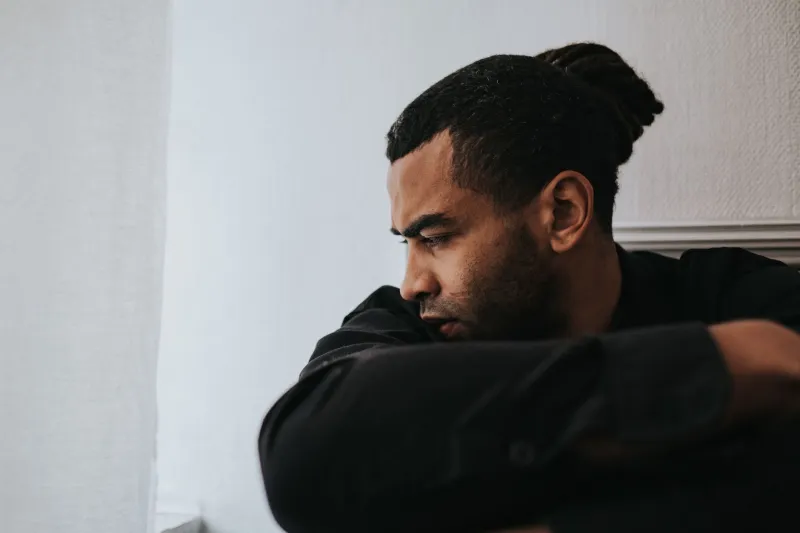
There's a version of grief that people can handle. It looks like quiet crying at the funeral, a few weeks of being a little quieter than usual, and then a gradual return to normal. People bring casseroles. They say the right things. They check in once, maybe twice. And then — almost without saying it out loud — they start expecting you back.
I played that role for a long time. Honestly? I was good at it.
I smiled when I needed to. I said "I'm hanging in there" when someone asked how I was doing, because "I haven't slept more than three hours in two weeks and I keep forgetting to eat" wasn't exactly brunch conversation. I performed a version of grief that fit neatly into other people's comfort zones. And I did it so automatically that I didn't even realize I was doing it until the whole thing caved in on me.
The Invisible Pressure Nobody Talks About
Here's the thing about grief that no one really prepares you for: the people around you are also uncomfortable. And their discomfort? It becomes your problem.
Not maliciously. Most of the time, people genuinely want to help. But "helping" often looks like nudging you toward okay-ness faster than you're ready for. It sounds like:
- "She would have wanted you to be happy."
- "It's been a few months — are you talking to someone?"
- "You need to get out of the house. Come to this thing with us."
None of those sentences are evil. But strung together, over weeks and months, they build a very specific message: your grief is making us uncomfortable, and we'd appreciate it if you wrapped this up.
So you do. Or you pretend to. You start performing recovery because actual recovery is taking longer than everyone's patience.
What "Performing Grief" Actually Looks Like
I didn't have a word for it until way later, but performing grief is basically this: curating your emotional responses to manage other people's reactions.
It's laughing at a memory instead of crying, not because you feel like laughing, but because laughing makes the room breathe again. It's saying "I'm good, really" when someone checks in, so they don't feel guilty for moving on with their day. It's showing up to the birthday party three weeks after a major loss because canceling would worry people, and you're tired of worrying people.
You're not healing. You're stage-managing your own pain.
For me, it got to a point where I genuinely couldn't tell what I actually felt versus what I was supposed to feel. I'd lost touch with my own grief because I'd been so busy packaging it for external consumption.
The Moment I Stopped
It wasn't dramatic. No one big speech, no confrontation. I just got tired.
A well-meaning friend told me — again — that I needed to "start living again," and something in me just... refused to perform. I didn't snap at her. I didn't cry. I just said, "I'm not ready yet, and I'm okay with that." And then I went home and let myself feel whatever the actual, unfiltered version of what I was carrying felt like.
It was not pretty. It was not linear. There were nights that felt like complete regression — sobbing over something small, going silent for days, skipping things I'd committed to because I simply couldn't. By the curated-grief rulebook, I was failing.
But something was different. I was actually moving through it instead of around it.
Why We Grieve for Other People
I've thought about this a lot. Why is it so automatic to manage our pain for the benefit of the people watching?
Part of it is cultural. American culture, in particular, has a deeply uncomfortable relationship with prolonged sadness. We celebrate resilience. We admire people who "bounce back." We tell stories of tragedy through the lens of what someone did with their pain — turned it into a nonprofit, ran a marathon, wrote a book. The sitting-in-it part doesn't get much airtime.
Part of it is also relational. When you're grieving, you're often already terrified of burdening the people you love. So you shrink it. You make it manageable. You protect them from the full weight of it, even when you're drowning.
And part of it — at least for me — was that performing okay-ness felt like control. When everything else was chaos, presenting a composed version of myself was something I could do. It was armor.
What Actually Helped
Letting grief be ugly — on my own terms, in my own time — didn't mean I fell apart publicly or made every conversation about my loss. It meant I stopped pretending I was further along than I was. It meant I said "no" to things without a detailed explanation. It meant I cried in the car and didn't immediately call someone to apologize for being sad.
A few things that genuinely helped during this time:
Giving myself an actual timeline. Not a deadline for being "over it," but permission to still be in it for longer than felt socially acceptable. Grief doesn't follow a calendar.
Being honest with one or two people. Not everyone. Just the ones who could handle the real version without trying to fix it. Having even one person who didn't need me to be okay was everything.
Stopping the check-in performance. When someone asked how I was doing, I started saying "honestly, it's still hard" instead of defaulting to fine. Most people handled it better than I expected.
Noticing when I was performing. Just the awareness of it — catching myself mid-smile when I actually wanted to cry — helped me make different choices in private.
The Part Nobody Warns You About
When you stop performing grief, some people won't love it. A few people in my life got weird when I stopped being "strong." Turns out, my composure was doing something for them — making them feel like everything was under control, like I was okay enough that they didn't have to worry.
When I stopped providing that? There was friction. Not catastrophic, but real. And honestly, navigating that friction told me a lot about those relationships.
The people who could sit with the real version of what I was going through — those are the ones I still talk to.
Grief on Your Own Terms
I'm not going to tell you there's a right way to grieve, because there isn't. But I will say this: if you've been managing your pain primarily to make other people comfortable, you might be prolonging it.
You're allowed to take longer. You're allowed to not be inspiring about it. You're allowed to miss something without turning it into a lesson. You're allowed to have a hard day six months, a year, two years later — without owing anyone an explanation for why you're not "over it" yet.
Grief is not a performance. And the moment I stopped treating it like one was the moment it actually started to move.