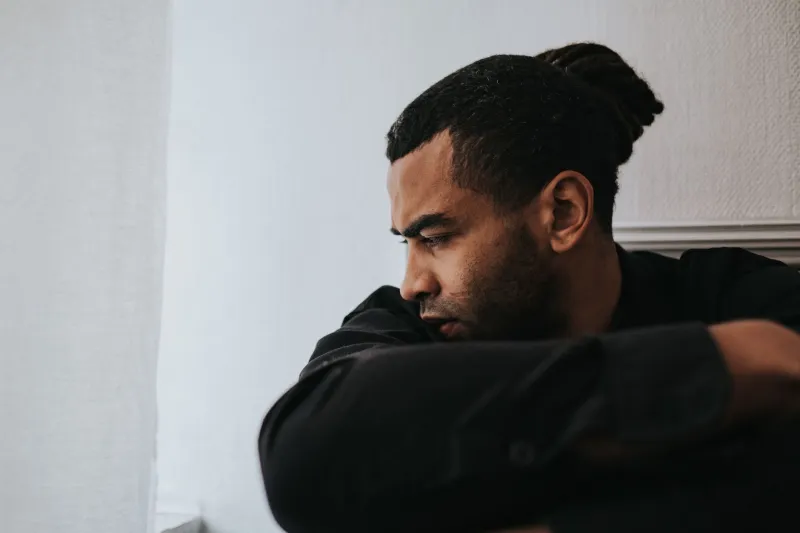
Three Months of Writing Down Every Regret — What the Patterns Said About Me Was a Lot

I didn't start this as some grand self-improvement experiment. Honestly, I was just annoyed at myself after a particularly bad week — the kind where you lie in bed at 2 a.m. replaying three separate moments where you clearly knew better and did the thing anyway. So I grabbed a notebook and wrote them down. All of them. Every "I should have said no" and "why did I agree to that" and "I knew this was going to happen."
I figured I'd do it for a week. Maybe two. Three months later, I had filled nearly forty pages, and the thing staring back at me from those pages was not comfortable to look at.
The Setup Was Stupidly Simple
No app. No system. No color-coded spreadsheet. Just a cheap spiral notebook I kept on my nightstand and a rule: before I went to sleep, I wrote down anything from that day I genuinely regretted — decisions, words, silences, missed moments. I tried not to filter it. If it felt like a regret, it went in.
Some entries were small. Ate junk food when I wasn't even hungry. Scrolled for an hour instead of finishing something I cared about. Others were bigger. Said yes to a project I had zero bandwidth for. Stayed quiet in a conversation when I had something real to say. Let someone talk to me in a way I didn't appreciate and smiled through it.
I didn't analyze anything at first. I just collected.
Month One: Everything Felt Random
The first few weeks, it all looked like noise. Random frustrations, isolated bad calls, normal human messiness. I almost quit because it felt like I was just cataloguing my failures without any real purpose. But I kept going mostly out of stubbornness, and somewhere around week three, I started noticing something.
A lot of my regrets involved people-pleasing disguised as flexibility. I'd frame it to myself as being easygoing or not making a big deal out of things — but the journal kept showing me moments where I'd bent my own preferences, boundaries, or schedule to accommodate someone else and then resented it almost immediately. The regret wasn't about being kind. It was about pretending I didn't have a preference when I very much did.
That one landed differently than I expected.
Month Two: The Pattern Got Uncomfortable
By month two, I started reading back through earlier entries, and that's when things got genuinely awkward. Because the patterns weren't subtle. They were loud and repetitive and a little embarrassing to acknowledge.
Pattern one: I consistently regretted decisions I made when I was tired or rushed. Not just occasionally — almost every time. Which meant I was repeatedly making significant choices in conditions I already knew were bad for my judgment. That's not bad luck. That's a habit.
Pattern two: Most of my social regrets weren't about things I did. They were about things I didn't say. Opinions I swallowed. Discomfort I absorbed quietly instead of naming. I kept writing some version of "I wish I'd just said something" and then acting surprised the next time I didn't.
Pattern three — and this one was the worst — I kept agreeing to things I already knew I'd regret in the moment of agreeing. The journal had receipts. Entries where I wrote, essentially, "I said yes and I knew immediately it was wrong but I did it anyway." Over and over. That's not a mistake. That's a choice I kept making while telling myself it was a mistake.
The Part Where I Had to Stop Blaming Circumstance
Here's the thing about tracking your own regrets for three months: you run out of external explanations pretty fast. You can only write "I was caught off guard" so many times before the notebook starts to feel like it's judging you.
The circumstances changed. The people changed. My job situation, my stress levels, my social calendar — all of it shifted across those three months. But the patterns? Largely the same. Which meant the common thread wasn't my circumstances. It was me. Specifically, it was the gap between what I knew I wanted and what I was actually choosing.
That's a different problem than bad luck or a rough season. That's a self-awareness issue, and it's a lot harder to fix because you can't blame it on anything outside yourself.
What I Actually Did With This Information
I won't pretend I overhauled my entire personality. That's not how this works, and anyone who tells you three months of journaling turned them into a completely different person is selling something.
What I did do: I made a short list of my three biggest patterns and put it somewhere I'd actually see it. Not to shame myself — more like a cheat sheet. When I'm tired and someone asks me for something, I have a note that basically says "you know what happens when you decide things exhausted, so don't." It sounds basic. It's helped more than I expected.
I also got more honest about the "I knew" moments. When I catch myself saying yes to something and feeling that immediate internal flinch, I've started treating that as data instead of anxiety to push through. That flinch has been right a lot more often than I gave it credit for.
The Bigger Takeaway
I think most of us have a story we tell about our patterns — that they're complicated, context-dependent, hard to predict. The regret journal kind of dismantled that story for me. My patterns weren't complicated. They were just consistent in ways I hadn't been paying attention to because paying attention felt uncomfortable.
Dismissing your own doubts as overthinking is sometimes valid. But sometimes it's just a convenient way to avoid accountability for choices you already know you're going to regret. Three months of writing it all down made it a lot harder to keep pretending I couldn't see the difference.
The notebook isn't pretty reading. But it's honest. And honest, it turns out, was the thing I actually needed.